
Starter fertiliser in substrates: base dressing explained

Тази статия е на английски език.
A starter fertiliser charge gives a young crop nutrients in the growing medium before a regular liquid feeding programme takes over. It is often called a base dressing, but it is not a complete feeding plan for the life of the crop.
When comparing an NPK fertiliser substrate for seeding with one for potting, the kg/m³ figure is a useful starting point. The crop stage, growing period, irrigation water and feeding method still determine which mix makes sense.
What does kg/m³ mean on a substrate specification?
The figure states how much fertiliser is added per cubic metre of substrate during mixing. A cubic metre is 1,000 litres, so a charge of 1.0 kg/m³ is equivalent to 1 gram of fertiliser per litre of substrate. It does not mean 1 gram of nitrogen per litre, or describe the concentration of a liquid feed.
The NPK designation describes the fertiliser used for that charge. SOLVIKA’s catalogue seeding and propagation mixes have 1.0 kg/m³ of NPK 14:16:18, while its professional potting substrates have 1.5 kg/m³ of NPK 14:16:18. Both ranges also contain a wetting agent and are pH adjusted to 5.5 to 6.5.
Keep the charge rate separate from a substrate EC reading. The rate tells you what went into the mix, whereas EC reflects soluble salts in the material tested at that point. Neither number, on its own, tells you exactly how a crop will respond under your irrigation and feeding regime.
If you are comparing specifications from different suppliers, first check whether they quote fertiliser added per cubic metre of mix or a measured nutrient concentration. Then check the fertiliser formulation and the test method used for any pH or EC figures. Similar-looking numbers can describe different things.
Why do seeding mixes have a lower starter charge?
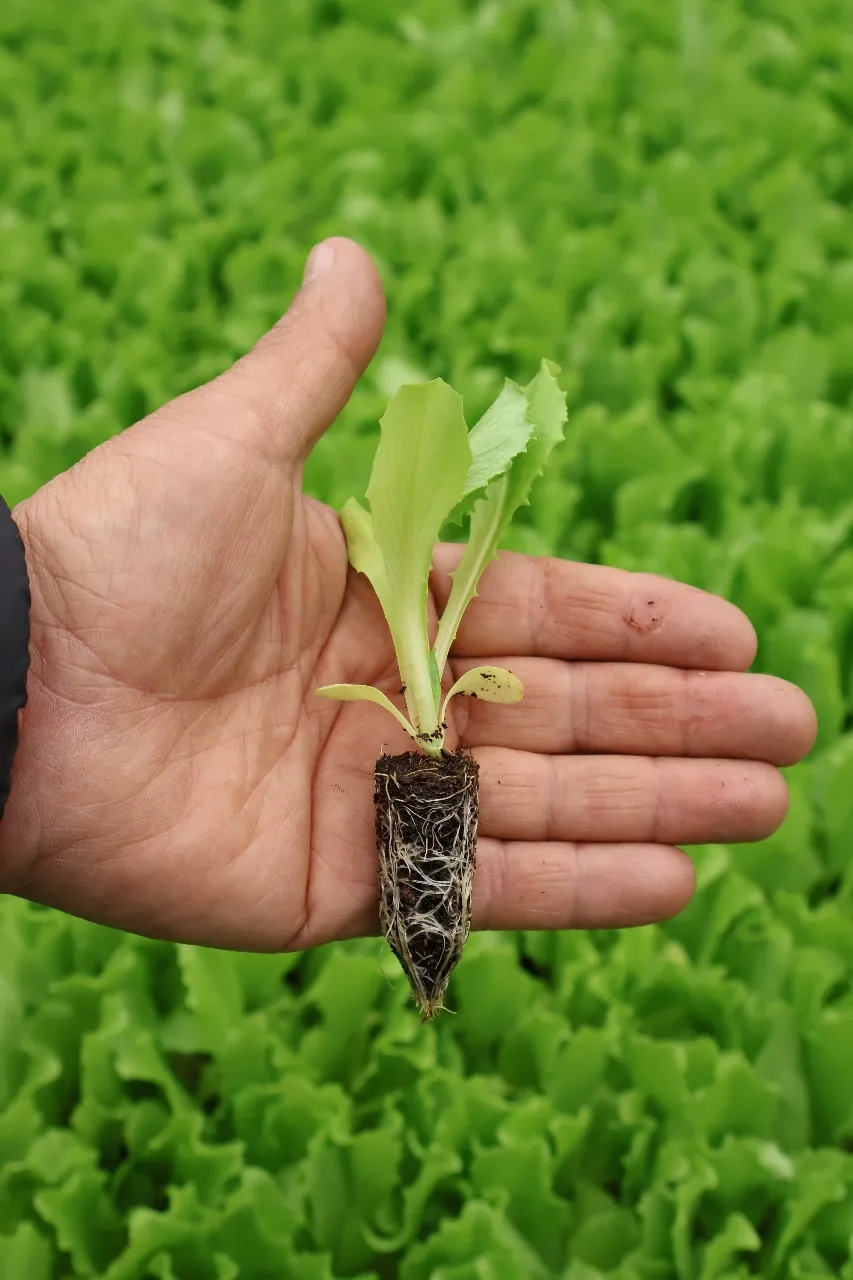
Seedlings and newly rooted cuttings occupy a small volume of growing medium and are usually managed with close attention to moisture and feed. A moderate starter charge gives them an initial nutrient supply without treating a small plug as though it were an established plant in a larger pot. Growers can then increase nutrition through liquid feeding as roots and shoots develop.
For example, 410LV is a fine, 0-10 mm white-peat seeding mix with the 1.0 kg/m³ starter charge. Fraction matters alongside fertiliser: a fine, consistent texture is generally easier to use in small cells than a coarse potting grade. The right choice still depends on cell size, crop and watering practice.
Potting on puts a more developed plant into a larger root volume, often for a longer growing period. The catalogue’s higher, 1.5 kg/m³ starter charge reflects that different use. 520LV, for instance, is a 0-20 mm white-peat potting substrate with that charge.
More base dressing is not automatically better. A crop with a particular sensitivity to salts, a short production cycle or a strong fertigation programme may call for a different approach. Decide on the starting mix and the follow-on feed together, rather than selecting a substrate by the fertiliser rate alone.
A base substrate leaves fertilisation to the grower
The term *base substrate* can be confusing because it is not the same as a substrate with a fertiliser base dressing. SOLVIKA’s pH-adjusted peat base substrates contain a wetting agent but no fertiliser. They are intended for growers or manufacturers who want to dose nutrients to their own recipe.
For example, 220LV is a 0-20 mm white-peat base substrate adjusted to pH 5.5 to 6.5. It gives a grower a starting material for blending or a planned feed programme, but it should not be mistaken for the fertilised seeding or potting mix with a similar fraction.
When planning your own dressing, specify the crop, container size, expected growing time and irrigation water quality. Decide whether nutrients will be incorporated, supplied in liquid feed, or divided between the two. Test the resulting medium and crop response under your conditions rather than assuming that a familiar kg/m³ figure will transfer unchanged to a new recipe.
When should liquid feeding start?
There is no reliable calendar date that applies to every crop. A starter charge is an initial supply, not a promise that nutrition will last for a set number of weeks. Its useful duration depends on plant demand, root development, irrigation and drainage, container volume and any nutrients already present in the water.
For a seeded crop, plan the first liquid feed around establishment and active growth, then adjust its strength to the crop’s stage. For potted plants, consider how much feed the plants received before transplanting and how quickly roots are moving into the new medium. Waiting for visible deficiency is a poor substitute for a feeding plan.
- Check the crop. Look at growth rate, leaf colour and root development together. A pale plant does not always need more fertiliser, since root damage or poor water management can produce similar symptoms.
- Check the medium. Monitor pH and EC using a consistent sampling method. Compare readings over time alongside irrigation and feed records rather than relying on one isolated result.
- Check the water. Account for its existing nutrients and alkalinity when setting a liquid feed programme. These can affect both nutrient supply and how substrate pH changes during production.
If you use a peat-reduced mix with wood fibre, review the feeding programme under your own conditions. Wood fibre can affect nitrogen availability, while a mix containing perlite will behave differently in watering and air space. SOLVIKA lists seeding and potting recipes with 15% wood fibre or 10% perlite, each with the starter charge specified for its range.

How do organic slow-release options differ?
An organic slow-release fertiliser is a different way of supplying nutrients from a conventional starter dressing. Its release depends in part on conditions in the growing medium, so growers should assess it as part of the whole crop programme, not simply replace one kg/m³ figure with another.
SOLVIKA makes organic seeding and potting mixes using 100% bio organic slow-release fertilisers described as working for 75 to 100 days. That period is a product-range description, not a fixed date for starting or ending supplementary feeding in every crop. Crop demand and growing conditions still need monitoring.
If you grow under an organic certification scheme, identify the scheme and its input requirements before choosing a mix. SOLVIKA can confirm a specification against the scheme you use. The wider substrate range also includes conventional ready-to-use mixes and unfertilised base substrates, so be clear which route your production plan calls for.
Frequently asked questions
Does 1.0 kg/m³ mean 1.0 kg of nitrogen?
No. It means 1.0 kg of the specified fertiliser is added per cubic metre of substrate. The nitrogen supplied is only a portion of that fertiliser, as indicated by its formulation.
Can a starter charge replace liquid feeding?
Treat it as an initial nutrient supply rather than a complete feeding programme. Plan liquid feeding around crop establishment, growth rate and the results of consistent crop and substrate checks. There is no single start date that suits every production system.
Is a pH-adjusted base substrate already fertilised?
No. SOLVIKA’s pH-adjusted peat base substrates have a wetting agent but no fertiliser, leaving you to choose the nutrient recipe. Specify whether you need this unfertilised base or a ready-to-use seeding or potting mix.
Do organic slow-release mixes remove the need to monitor feed?
No. SOLVIKA’s organic range uses slow-release fertilisers described as working for 75 to 100 days, but release and crop demand must still be considered under your conditions. Monitor the plants and growing medium, and tell us which organic certification scheme you work under so the specification can be checked against it.
For a recommendation or delivered price, send us your crop, container size, feeding approach, required volume, packaging, destination and delivery term. If you already use a substrate, include its specification or datasheet.


