
How to choose a seeding substrate for trays and plugs

Dit artikel is in het Engels.
A good seeding substrate has to do several jobs at once. It must fill small cells consistently, take up water without leaving some plugs saturated and others dry, and support roots while seedlings are still small.
Start with the tray and the crop, not just the name on the bag. Cell size, sowing depth, irrigation method and time before transplanting all affect which fraction and formulation are worth testing.
Match the fraction to the cell size
Fine material is usually the starting point for small plugs because it fills narrow cells and gives seeds a relatively uniform surface. A fraction that is too coarse for the tray can bridge over cells or leave large gaps. Material that is too fine for the crop and watering regime may settle tightly and reduce the air available to young roots.
SOLVIKA’s seeding and propagation range includes fine fractions rather than a single grade for every tray. For example, 405LV is a white peat seeding mix screened to 0-5 mm. Check the actual cell dimensions and filling equipment before choosing between extra-fine and wider fractions.
- Small plugs. Begin trials with an extra-fine or fine fraction. Check whether every cell fills to the same level without having to force the mix into place.
- Larger trays. A somewhat wider fraction may be workable when cells are deeper and roots will occupy the tray for longer. Compare filled-cell weight and root development, not particle size alone.
A screening such as 0-5 mm describes a range of particles, not one particle size. Run a short filling test with your own trays, then lift several cells from different positions to look for voids and differences in compaction.
Keep starter fertiliser appropriate for young plants
Seedlings need nutrition, but a starter charge is only one part of the feeding plan. SOLVIKA’s listed seeding and propagation mixes contain 1.0 kg/m3 of NPK 14:16:18 and a wetting agent, with a stated pH of 5.5 to 6.5. The listed professional potting substrates have a higher starter charge of 1.5 kg/m3, so the two ranges should not be treated as interchangeable.
Choose a feed programme around the crop, the irrigation water and the length of time plants will stay in the plug. In typical nursery practice, growers check substrate electrical conductivity and pH after watering and again as roots establish. Those readings help distinguish a feeding issue from a watering or temperature problem.
If you want to set every fertiliser input yourself, SOLVIKA also offers pH-adjusted base substrates with a wetting agent and no fertiliser. They are a different starting point from a ready-to-use seeding mix. Tell the supplier whether you plan to add fertiliser during mixing, through irrigation or both.
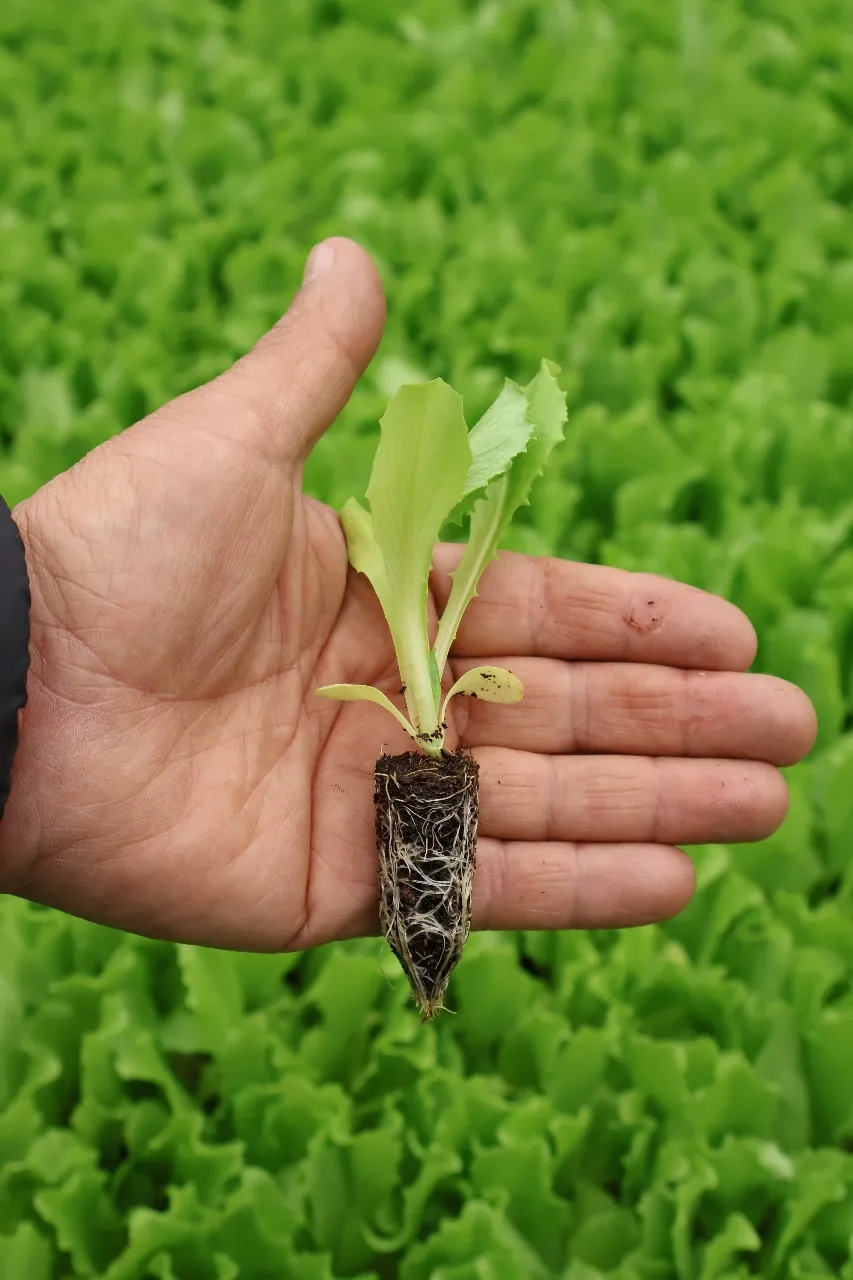
Even water holding starts with even filling
Peat can hold substantial water, but the way a tray is filled changes how evenly that water moves through the cells. Loose, underfilled plugs can dry at the surface, while heavily compressed plugs may drain and rewet differently. Aim for repeatable filling rather than maximum pressure.
- Condition the mix. If material seems dry on opening, assess its moisture before it reaches the filling line. Add water gradually where needed and allow time for it to distribute rather than soaking one section of a batch.
- Fill consistently. Keep hopper feed, tray speed and any compression setting steady during a trial. Inspect edge and centre cells because equipment does not always fill them identically.
- Water the finished tray. Check several plugs after the first irrigation, including cells that look wet at the surface. Look for a reasonably even moisture profile without leaving the tray standing in water unnecessarily.
SOLVIKA’s seeding mixes include a wetting agent. That does not remove the need to check your own irrigation pattern, particularly when changing cell size or switching between overhead watering, booms and subirrigation. Record how quickly trays wet through and how they dry between irrigations.
Choose perlite or wood fibre for a reason
A plain peat seeding mix gives you a useful reference point before changing the recipe. SOLVIKA also lists versions with 10% perlite and versions with 15% wood fibre. Both alter the physical make-up of the mix, but their performance in a plug depends on the fraction, filling pressure, crop and watering schedule.
For an extra-fine white peat example, 406WP10 contains 10% perlite, while 406WF15 contains 15% wood fibre. Both are listed at 0-6 mm, with the seeding-range starter fertiliser and wetting agent. Test them alongside the plain mix in the same tray format rather than assuming that an added component will solve a watering problem by itself.
Perlite is commonly used where a grower wants to adjust air space and drainage. Wood fibre offers another way to change structure while reducing the peat share. When trialling either, watch plug firmness, wetting after a dry period, root distribution and the timing of the first feed. A change in structure may also call for a change in irrigation frequency.

Run a tray trial before changing the whole crop
A useful comparison holds the crop, seed lot, tray, filling settings and location as steady as possible. Change one substrate choice at a time, then compare emergence, uniformity, plug strength and ease of transplanting. Note any adjustments to irrigation or feeding so that a better result is not credited to the wrong variable.
Measure what matters to your operation. That might be the proportion of cells that fill cleanly, how many plugs lift intact, or how evenly trays dry across a bench. Inspect roots as well as shoots, since similar-looking tops can hide differences in how thoroughly the cell has been occupied.
When discussing a seeding substrate with a supplier, give the crop, cell count or cell volume, sowing method and expected time in the tray. Add your current fraction, watering method, feed programme and the problem you want to correct. These details make a recommendation more useful than asking for a fine mix in isolation.
Frequently asked questions
What fraction should I use for plug trays?
Extra-fine or fine fractions are a sensible starting point for small cells, but the right choice depends on cell size and filling equipment. Trial the mix in your actual trays and check for consistent fill, voids and compaction.
Do seeding mixes already contain fertiliser?
SOLVIKA’s listed seeding and propagation mixes contain 1.0 kg/m3 of NPK 14:16:18, alongside a wetting agent. Plan any subsequent feed around your crop, irrigation water and time in the tray.
Should I choose perlite or wood fibre?
Choose according to the change you want to test, not the ingredient alone. SOLVIKA lists seeding versions with 10% perlite and 15% wood fibre. Compare each with a plain mix under the same tray-filling and growing conditions.
Can I use a substrate without starter fertiliser?
Yes. SOLVIKA’s pH-adjusted base substrates contain a wetting agent but no fertiliser, leaving you to set the feeding recipe. Specify your required fraction and how you intend to apply fertiliser when asking for a recommendation.
Send us your crop, tray dimensions, current substrate specification, preferred packaging and destination through the contact form. We can use those details to discuss a suitable mix or a delivered price.


